



Kayak Duck Hunting with the Wilderness Systems Recon 120

From Frozen Rivers in New York to Québec’s Fall Marshes

2026-03-18

There is a particular kind of silence that belongs only to waterfowl hunters. The kind you find before sunrise, when the marsh is still and the only sound is the soft dip of a paddle. For a growing number of hunters, that silence begins not from a shoreline blind, but from the seat of a kayak.

For Wilderness Systems Ambassador Trevor Moser (New York, USA) and Pro Team member Francis Carrière (Québec, Canada), kayak duck hunting is a true advantage in the field. And at the center of their approach sits the Wilderness Systems Recon 120, a fishing kayak whose stability, capacity, and versatility make it uniquely suited to the demands of waterfowl hunting across seasons and regions.

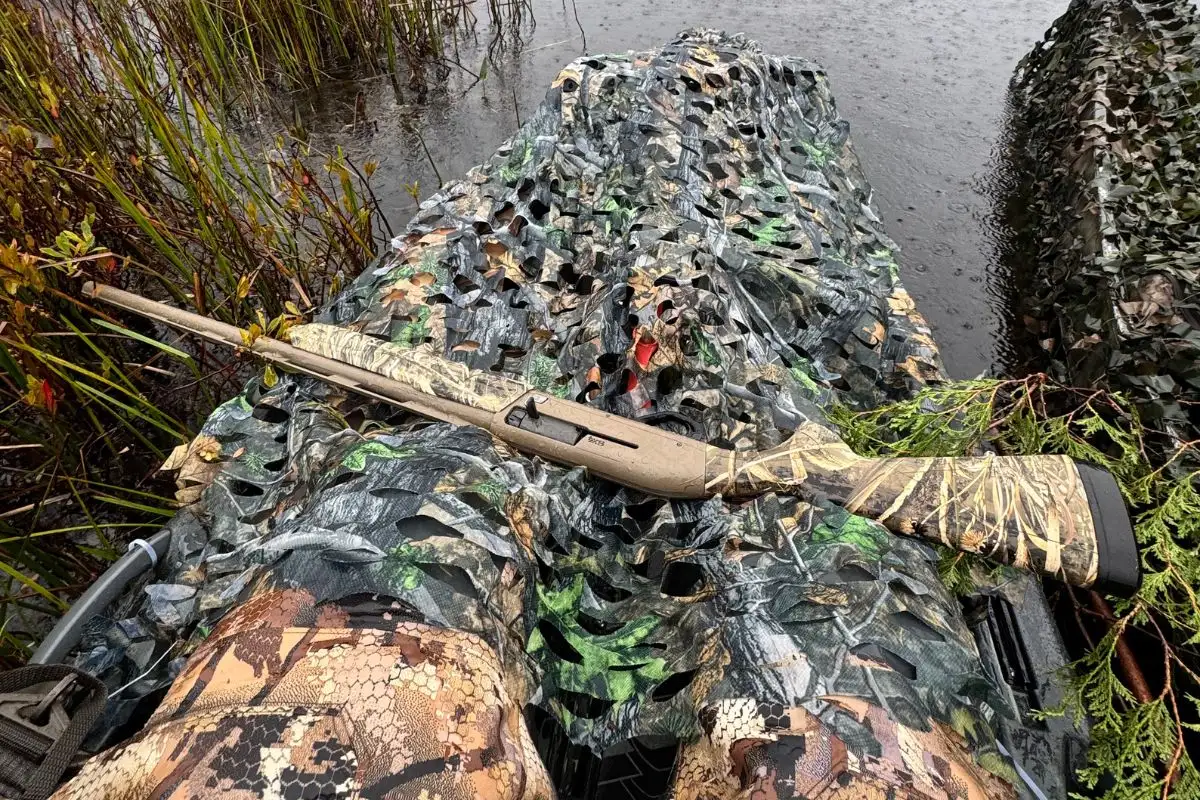
Francis Carriere from the Wilderness Systems Pro Team Canada kayak duck hunting in a Recon 120

Why Kayak Duck Hunting Changes the Game

Ask any experienced waterfowl hunter, and they’ll tell you: access is everything.

Kayaks open doors—or rather, waterways—that larger boats simply can’t reach. Whether it’s a narrow creek off the Hudson River, a flooded timber pocket in Québec, or a shallow marsh choked with cattails, the ability to quietly slip into untouched areas can mean the difference between an empty strap and a full limit.

They also offer something less tangible, but just as valuable: stealth. Unlike motorized boats, kayaks move almost silently. It’s not uncommon to pedal or paddle within yards of feeding ducks in low light without spooking them, a detail that seasoned hunters learn to exploit.

Trevor puts it simply in his winter setups: “If you can get where others won’t—or can’t—you’re already ahead.”

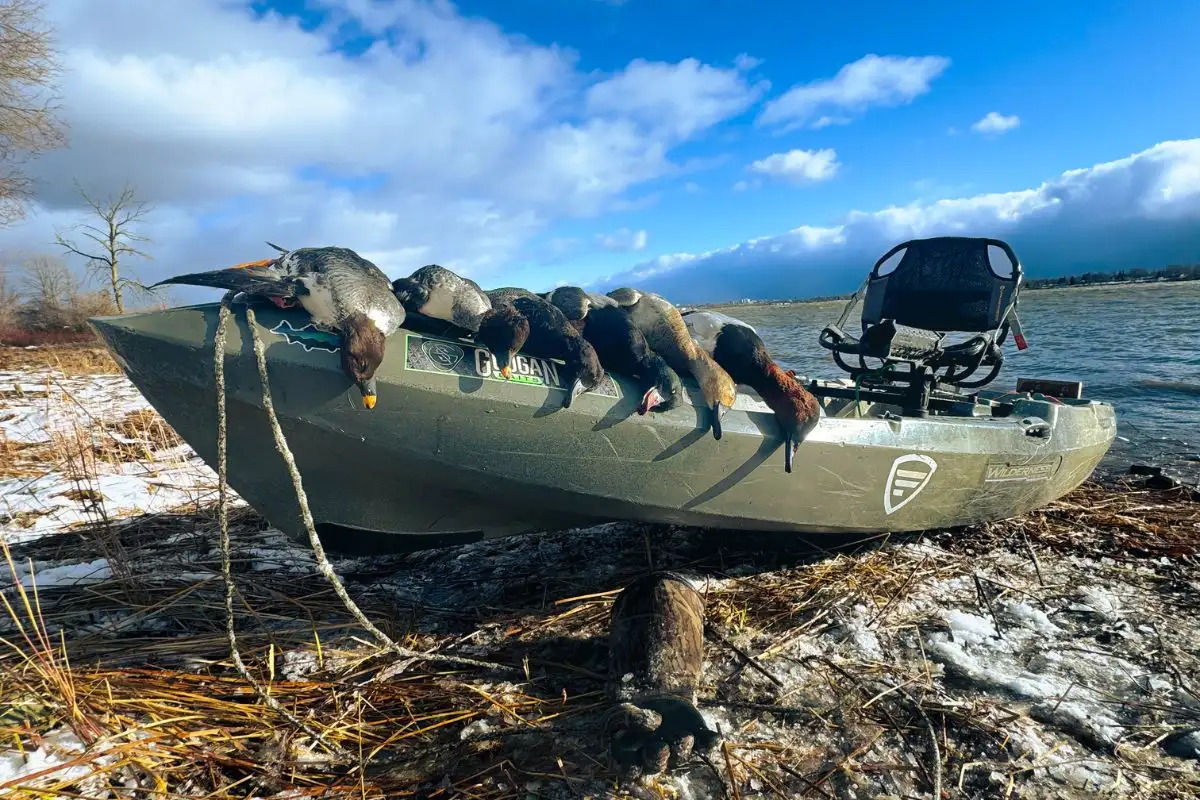
Wilderness Systems Pro Team member Trevor Moser duck hunting from a Recon 120 kayak

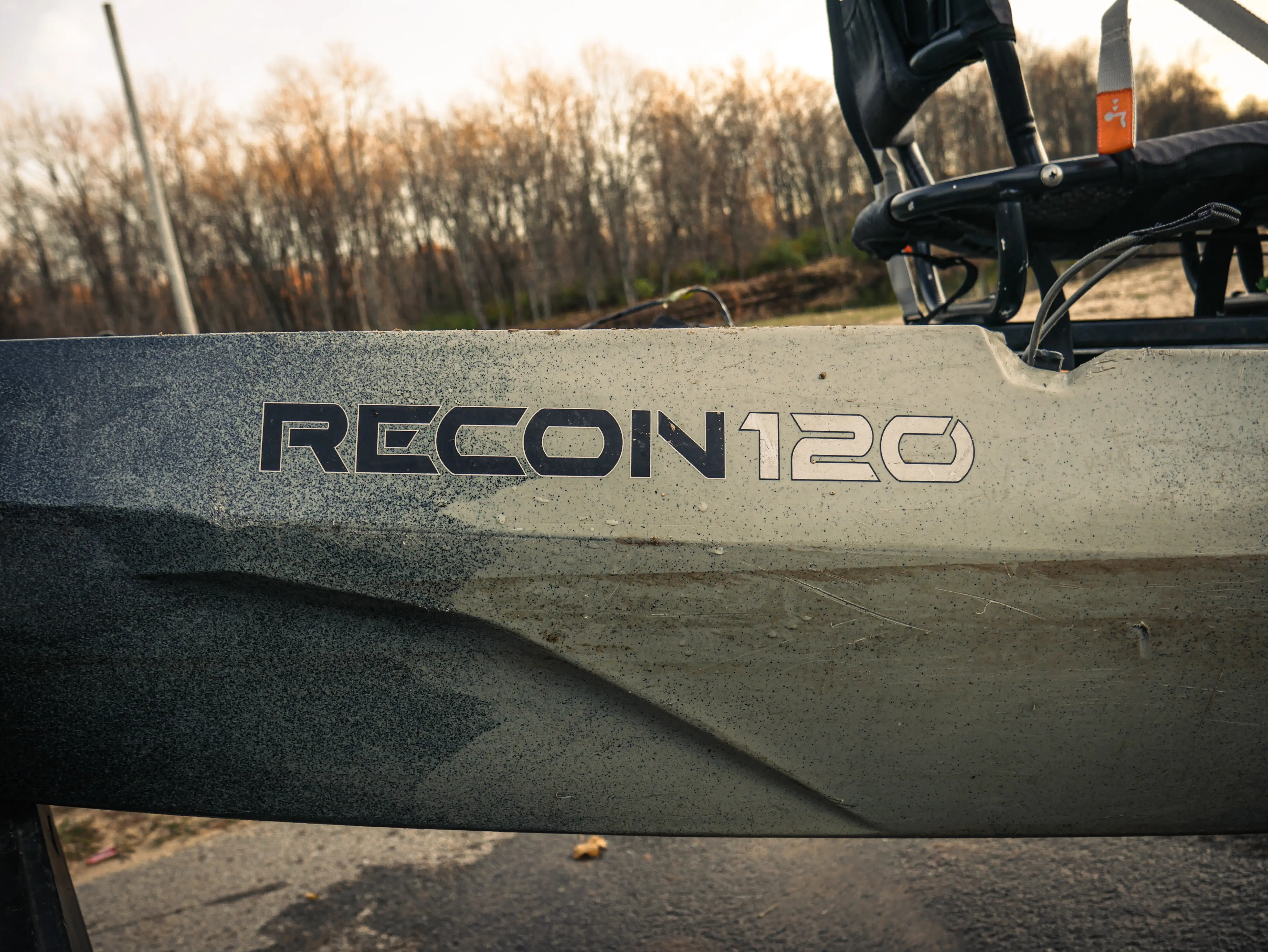
Meet the Platform: Wilderness Systems Recon 120

The Recon 120 wasn’t designed as a hunting kayak, but it might as well have been.

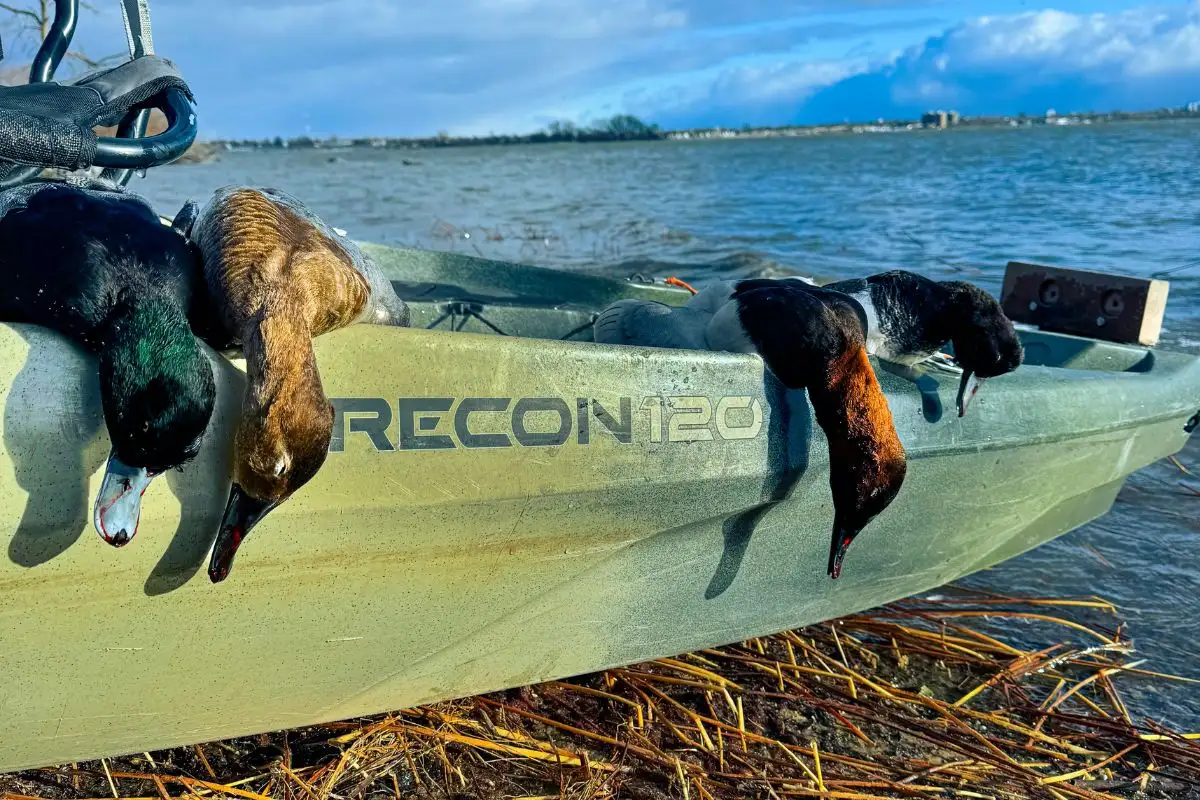
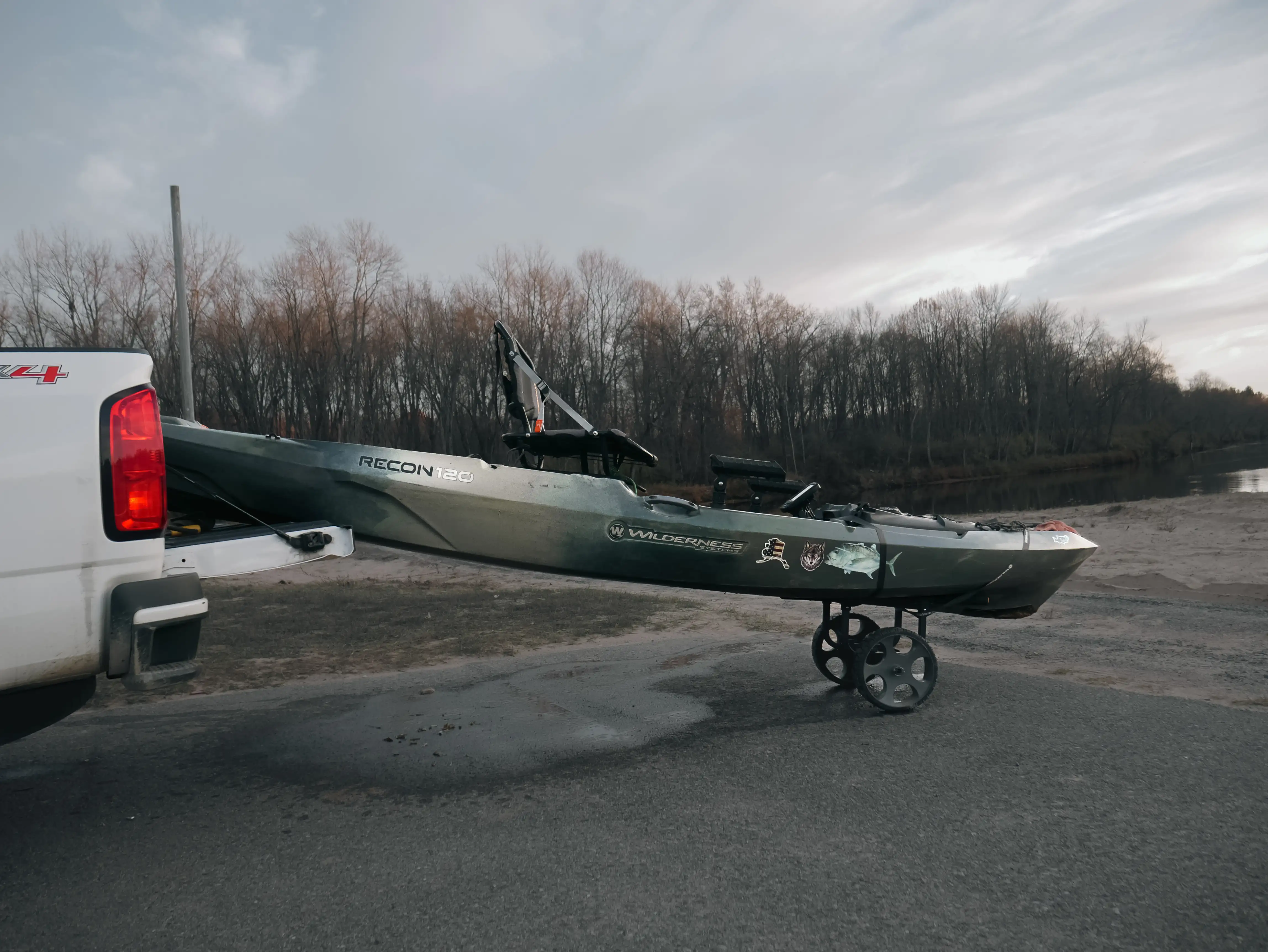
At 12 feet in length, it hits a sweet spot that experienced hunters often favor: long enough for tracking and load capacity, but compact enough for maneuverability in tight marshes. That balance becomes critical when transporting decoys, firearms, and cold-weather gear.

What sets the Recon 120 apart is its S.M.A.R.T. hull design—a modern evolution of tunnel hull concepts that delivers improved stability, tracking, and maneuverability without feeling like a traditional fishing kayak. Its wide stance and thoughtful hull engineering give hunters confidence when conditions shift or quick decisions are needed.

Because one truth echoes across every experienced kayak hunter’s advice: stability isn’t optional, it’s survival.

Wilderness Systems Pro Team member Trevor Moser duck hunting from a Recon 120 kayak

Winter in New York: Trevor Moser’s Cold-Water Approach

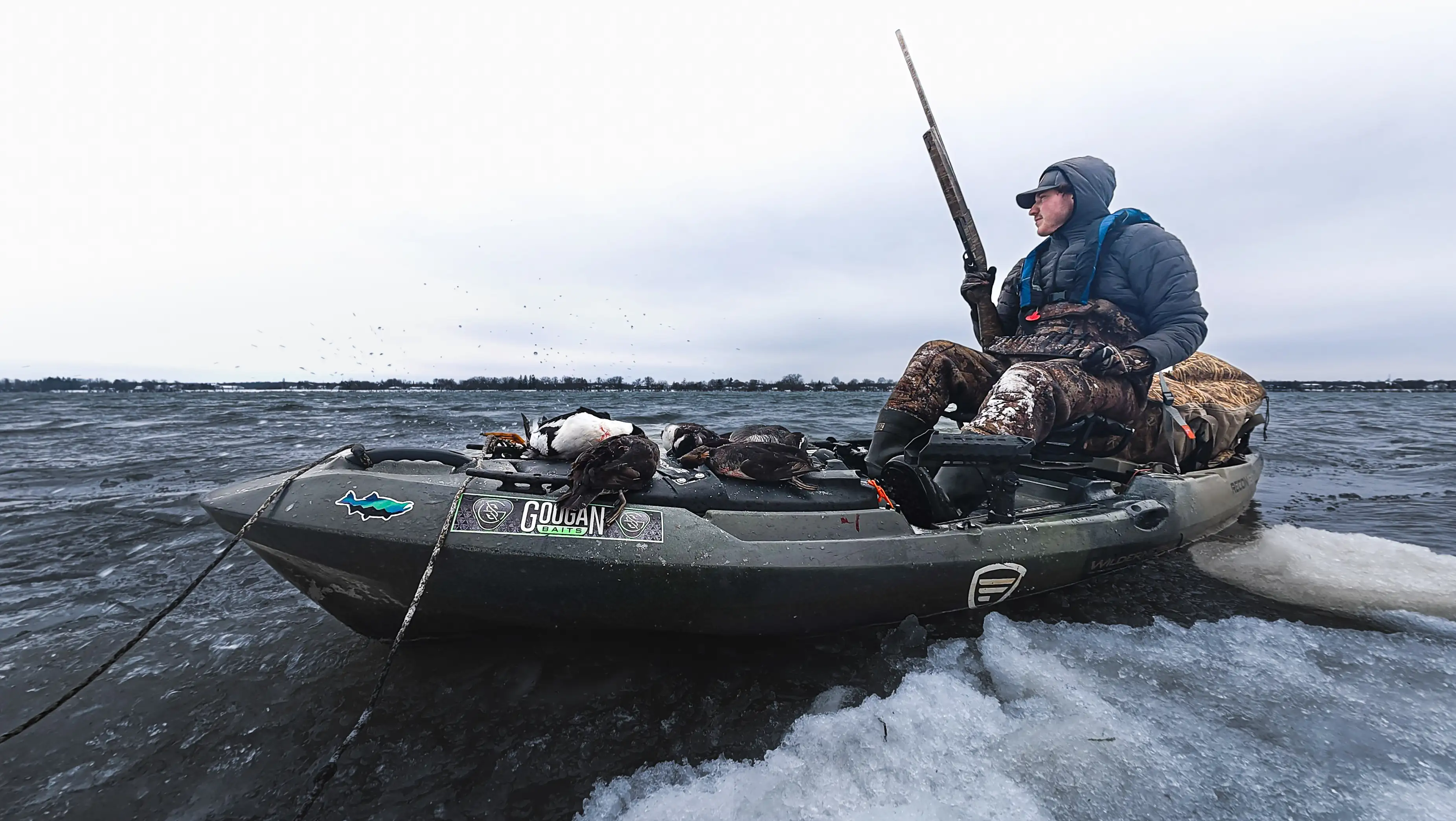
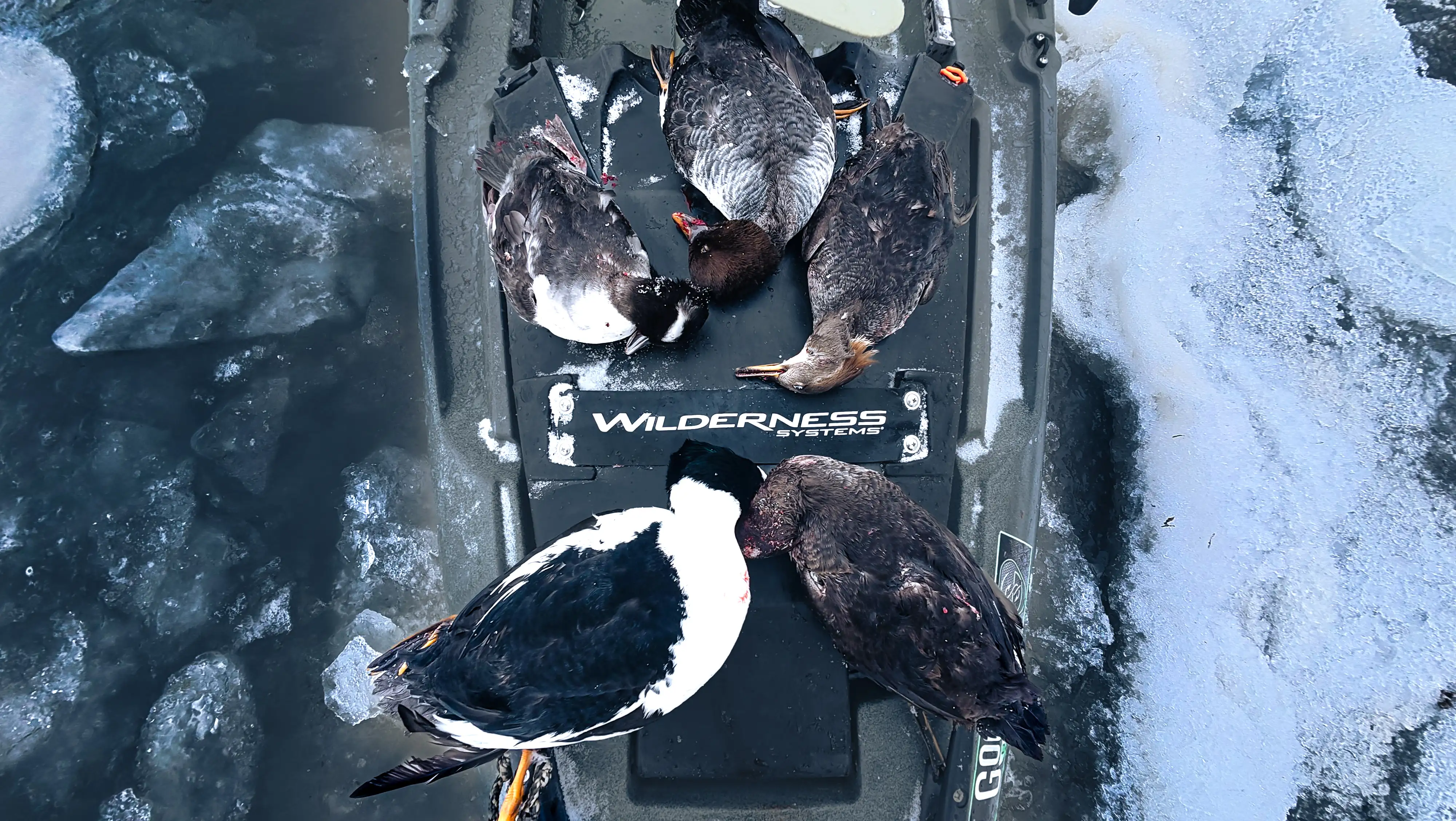
In New York, duck season stretches into late fall and early winter, often pushing hunters into harsh conditions along the Atlantic Flyway. Trevor targets areas like inland lakes, river systems, and sheltered bays where species such as mallards, black ducks, buffleheads, and goldeneye stage during migration.

But winter kayak hunting introduces real risk.

Wilderness Systems Pro Team member Trevor Moser duck hunting from a Recon 120 kayak

Cold water immersion is one of the most serious dangers. Among experienced hunters, a rule circulates often: if the air temperature and water temperature combined fall below 120°F (≈49°C), the risk of hypothermia becomes significant. In these conditions, a simple capsize can turn critical within minutes.

Trevor adapts accordingly:

  • He prioritizes transport over shooting from the kayak, often setting up in natural cover once he reaches his spot.
  • He keeps his weight centered and low, avoiding sudden movements.
  • He treats the kayak as a mobile access tool first, hunting platform second in extreme cold.

The Recon 120’s stability helps, but judgment remains the most important piece of equipment. Many seasoned hunters echo the same sentiment: a limit of ducks is never worth the risk of cold-water exposure.

Wilderness Systems Pro Team member Trevor Moser duck hunting from a Recon 120 kayak

Fall in Québec: Francis Carrière and the Marsh Advantage

In Québec, the rhythm is different. Fall brings vibrant marshes, dense vegetation, and a wide range of waterfowl across the province’s 29 hunting zones.

Francis Carrière operates in a landscape defined by abundance—wetlands, rivers, and shallow lakes that hold species like teal, wood ducks, and Canada geese early in the season, followed by migrating puddle ducks later on.

Here, the kayak becomes more than transport—it becomes part of the hunt.

Wilderness Systems Pro Team member Francis Carriere duck hunting from a Recon 120 kayak in Canada

In calmer, milder conditions, Francis can:

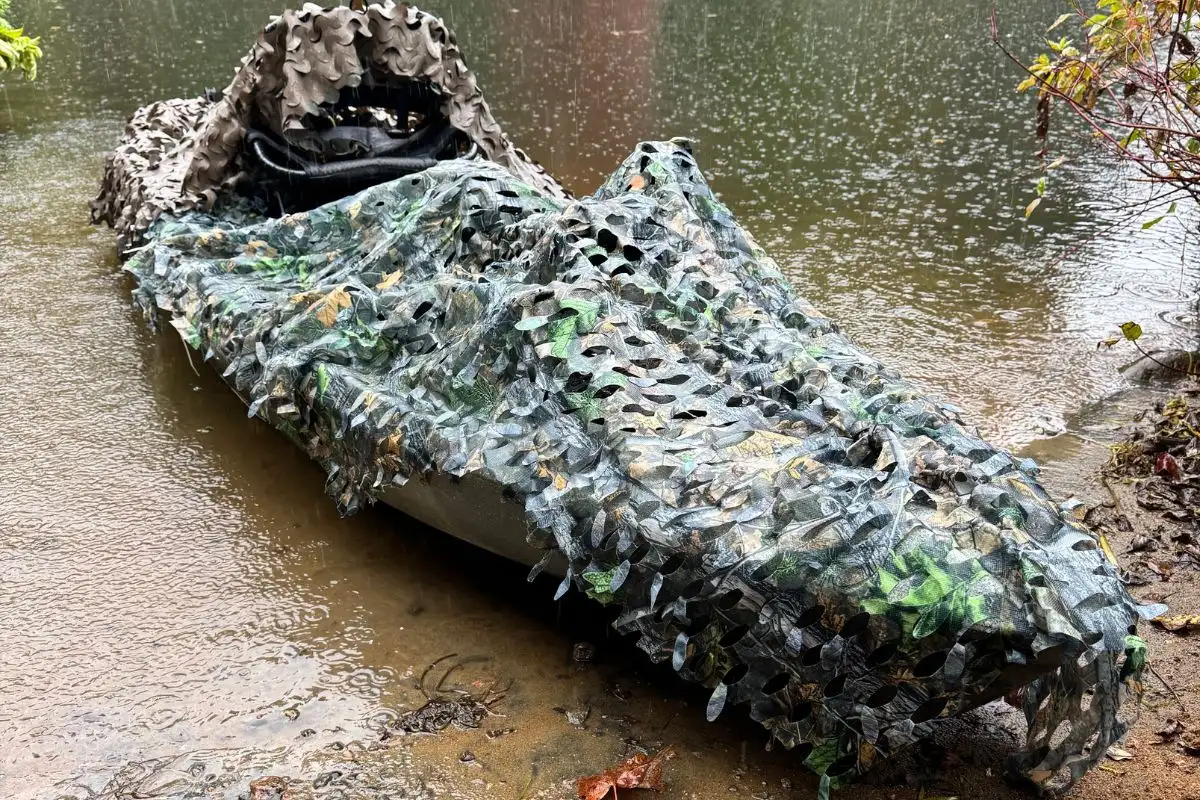
  • Use the Recon 120 as a low-profile blind, blending into reeds and cattails
  • Access muddy, shallow zones where wading is nearly impossible
  • Navigate between spots efficiently during longer scouting sessions

Québec’s environment rewards versatility. Hunters often combine paddling, short portages, and repositioning throughout the morning. The Recon 120’s load capacity and deck space make it well-suited for carrying decoys, camouflage materials, and even additional gear like sleds or floating decoy bags.

And like many hunters in the province, Francis embraces the broader experience: not just the hunt itself, but the immersion in landscapes where hunting remains deeply tied to tradition and territory.

Wilderness Systems Pro Team member Trevor Moser duck hunting from a Recon 120 kayak

Hard-Earned Lessons from the Water

Across both regions, a few lessons surface again and again, reinforced by years of experience and echoed widely within the hunting community:

  1. Know your limits.
    Shooting from a kayak is possible, but it requires practice, balance, and realism. Many hunters prefer to stabilize in shallow water or step out before taking shots.
  2. Stability matters more than anything.
    A wide, flat-bottom hull like the Recon 120 provides a major advantage, especially when handling recoil or shifting weight.
  3. Always wear a PFD.
    Not stored. Not nearby. Worn. Especially in cold water conditions.
  4. Practice before the season.
    Experienced hunters often test their setup in warm weather. Learning how far the kayak can tilt, how it reacts to movement, and how to re-enter after a capsize.
  5. Plan for failure, not just success.
    Dry bags, spare clothes, tethered gear... these aren’t extras, they’re essentials.
Wilderness Systems Pro Team member Trevor Moser duck hunting from a Recon 120 kayak

A Different Kind of Hunt

Kayak duck hunting strips the experience down to its essentials. No engines. No shortcuts. Just water, movement, and decision-making.

For Trevor in New York, it’s about pushing into late-season conditions with caution and precision.
For Francis in Québec, it’s about fluid movement through rich, ever-changing marshland.

In both cases, the Recon 120 serves as a reliable constant—a platform that adapts to environment, season, and style.

And perhaps that’s the real appeal.

Because beyond the gear and the strategy, kayak duck hunting offers something harder to define: a closer connection to the landscape, and a quieter way to move through it, one paddle stroke at a time.